How to Turn Your Balcony Into a Mini Garden
- mompspomps
- Dec 12, 2025
- 4 min read

You don’t need a backyard, a green thumb, or unlimited time to create a beautiful garden. Even the smallest balcony can become a calming, green escape — a place where you sip your morning coffee, wind down after work, or just feel a little more connected to nature.
The secret to a successful balcony garden isn’t about cramming in as many plants as possible. It’s about working with your space, your light, and your lifestyle. Here’s how to turn your balcony into a mini garden that’s realistic to maintain and genuinely enjoyable to use.
1. Understand Your Balcony’s Light (This Changes Everything)
Before buying a single plant, spend a few days paying attention to how sunlight hits your balcony.
Ask yourself:
Does it get full sun (6+ hours)?
Partial sun (3–5 hours)?
Or is it mostly shaded?
This step alone will save you money and frustration. A sun-loving plant on a shady balcony will struggle no matter how much care you give it.
Quick guide:
Sunny balconies: herbs, succulents, tomatoes, bougainvillea, geraniums
Partial sun: pothos, ferns, philodendrons, peace lilies
Low light: snake plants, ZZ plants, calatheas, ferns
If you’re unsure, start with low-maintenance plants and see how they respond before expanding.
2. Start Small (Seriously)
One of the biggest beginner mistakes is buying too many plants at once. It looks exciting at first… until watering, pruning, and pest control become overwhelming.
Start with:
3–5 plants
A mix of one statement plant and a few smaller ones
Plants with similar watering needs
Once you’re comfortable, you can slowly add more. A mini garden should bring peace — not stress.
3. Choose the Right Containers
Containers matter more than most people realize. They affect drainage, root health, and even how often you need to water.
What to look for:
Drainage holes (non-negotiable)
Lightweight materials if your balcony has weight limits
Sizes that match the plant’s growth
Great container options for balconies:
Terracotta (breathable but dries faster)
Plastic or resin pots (lightweight, low maintenance)
Fabric grow bags (great for herbs and veggies)
Always place a tray underneath or use self-watering pots if dripping water is an issue.
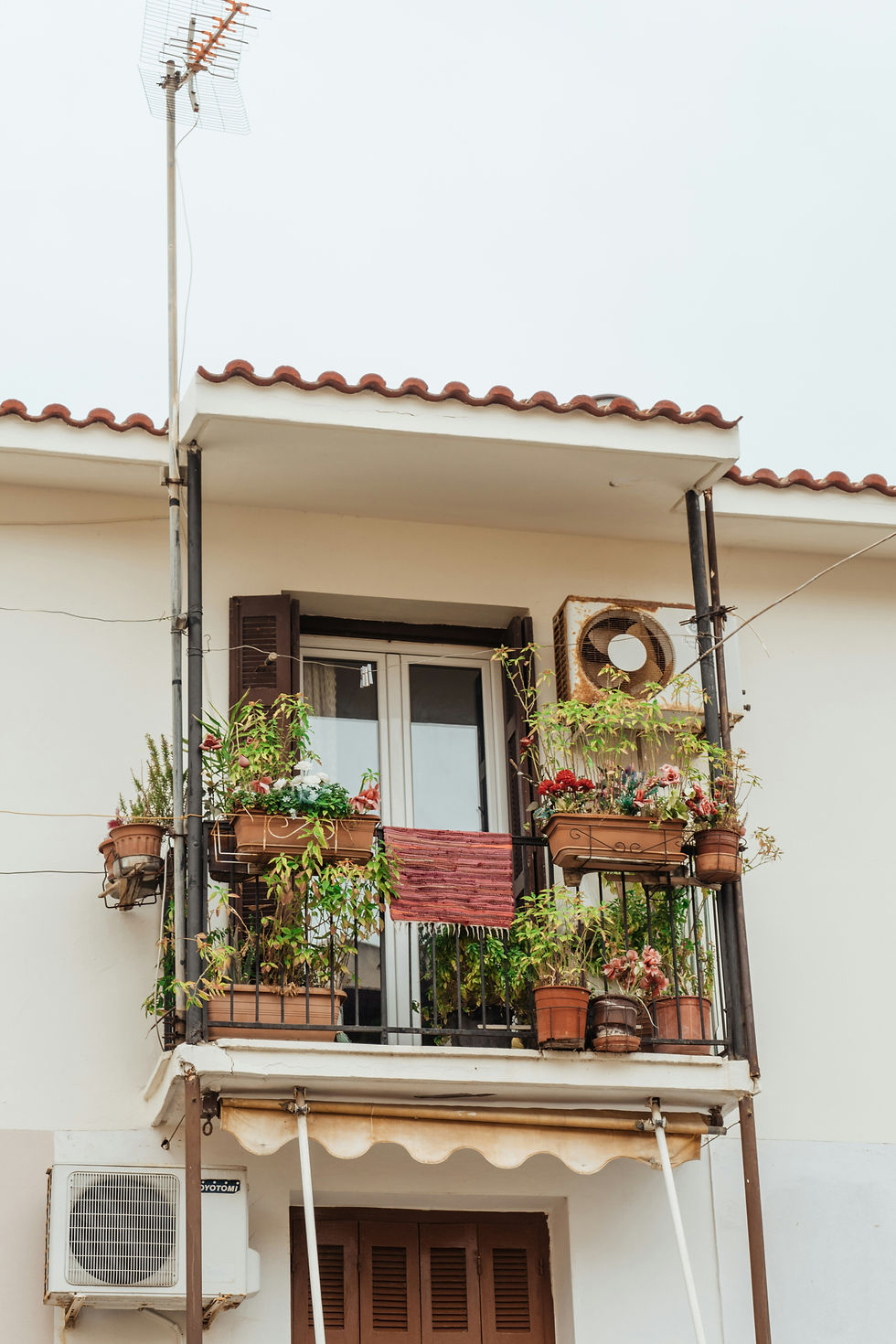
4. Use Vertical Space to Maximize Greenery
When floor space is limited, go up.
Vertical gardening instantly makes a balcony feel lush without crowding it.
Try:
Wall-mounted planters
Hanging pots
Ladder shelves
Rail planters (perfect for herbs and trailing plants)
Trailing plants like pothos, string of pearls, or philodendron look especially beautiful cascading down railings or shelves.
5. Pick Plants That Match Your Lifestyle
Be honest with yourself. Are you someone who loves daily plant care, or do you forget to water for a week?
Choose plants accordingly.
Low-maintenance favorites:
Snake plants
ZZ plants
Succulents
Aloe
Herbs like rosemary and thyme
If you enjoy hands-on care:
Basil and mint
Flowering plants
Vegetable plants like chilies or cherry tomatoes
A realistic plant selection is the difference between a thriving garden and a guilt-filled one.
6. Use Quality Potting Mix (Not Garden Soil)
Never use regular garden soil in containers. It compacts easily and holds too much moisture, which leads to root rot.
Instead, use:
Potting mix specifically for containers
Herb or vegetable mix if you’re growing food
A bit of perlite or sand for extra drainage
Good soil equals healthier plants and fewer problems long-term.

7. Create a Watering System That Works for You
Watering is where many balcony gardens fail — either from overwatering or forgetting entirely.
Simple solutions:
Water in the morning to reduce evaporation
Group plants with similar water needs
Use self-watering pots if you travel often
Keep a small watering can on the balcony as a visual reminder
In hot climates, expect to water more often. In rainy seasons, check soil moisture before watering.
8. Add Garden Furniture (Even One Chair Makes a Difference)
A mini garden should be used, not just admired.
Even the smallest balcony can fit:
A foldable chair
A small stool
A floor cushion or bench
Once you have somewhere to sit, the space transforms from “plant storage” into a retreat.
9. Style with Purpose, Not Clutter
It’s tempting to add lanterns, rugs, and decorative items — but less is more in a small space.
Focus on:
One or two decorative accents
Natural textures like wood or rattan
Neutral colors that don’t overpower the greenery
Plants should be the star.
10. Be Patient — Gardens Grow Over Time
Your balcony won’t look like a lush jungle overnight. And that’s okay. Plants need time to grow, adapt, and fill out. A mini garden is a living space that evolves with the seasons.
Take photos along the way. You’ll be surprised how much changes in just a few months.
Final Thoughts
Turning your balcony into a mini garden isn’t about perfection — it’s about intention. By understanding your light, choosing the right plants, and designing a space that fits your lifestyle, you can create a green escape no matter how small your balcony is.
Start simple. Let your garden grow with you. And most importantly, enjoy the process — because that’s where the real magic is


Comments